Build an electrician website that earns trust and brings in enquiries
Whether you are starting out as an independent electrician or replacing a dated website, this guide will help you create a professional, well-organised site that is easy to maintain. It also explains how Webfolio can handle much of the setup, without any technical expertise.


Why create a website for your electrical business?
When someone needs an electrician, they want to know what work you handle, which areas you cover and how to get a quotation or arrange a visit. Clear credentials and practical information matter.
A good website brings those answers together in a place you control, rather than scattering them across social media, your Google Business Profile, booking platforms and directories. It is especially helpful to first-time visitors.
A good website can help you:
- Introduce your business: share your story, your team, what makes you different and how you work.
- Explain what you offer: give clear information about fault finding, socket and switch replacement and the other services or options available.
- Build confidence: show completed installations, work equipment and your branded vehicle, highlight your qualifications, appropriate insurance and completed projects and share genuine reviews where appropriate.
- Make enquiries easier: let people see the types of work you take on and how to request a quote or site visit.
- Improve local visibility: create useful pages for people searching for electrical services in your area.
Your site also gives people referred by someone they know a reliable source for your services, contact details and practical information.
A website cannot guarantee new customers or a top position on Google. It does give your business a professional home online where people can learn about you and take the next step.
Building an electrician website is about more than choosing colours. You need a clear structure, useful copy, reliable information, a simple way to get in touch and a solid foundation for discoverability on Google, Bing, ChatGPT and elsewhere.
Create your site by answering a few questions: free for 14 days, no credit card.
Essential pages for an electrician website
An electrician website does not need dozens of pages or a complicated interface. Visitors need the right information in the right place, with no unnecessary distractions.
Someone looking for your rates or service area should not have to search through your biography.
With Webfolio, you do not have to plan every page yourself. The platform uses the details you provide to prepare the main pages and organise your content.
Here are the pages worth including.
- 01. Essential pages for an electrician website
A clear, welcoming homepage
Your homepage should make it immediately clear who you are, what you offer, where you are based and how to book or get in touch.
“Electrician in Bordeaux — Repairs and Quotations” is more useful than a headline that gives no indication of your services.
Introduce your main areas of work, the locations you cover and a few examples of completed projects. Make it easy to request a quote.
Place a “Request a Quote” or “Book a Visit” button where people can see it immediately.
With Webfolio
Your home page is prepared from the information you give about your practice. You can then change the text, the images and the layout to match your identity.
- 02. Essential pages for an electrician website
A Services page that explains your work
A dedicated services page can clarify what work you undertake, what requires an assessment and when you provide a quote.
Depending on your business, you might include:
- fault finding;
- socket and switch replacement;
- light fitting installation;
- electrical renovation;
- consumer unit safety work;
- site survey for a quotation.
For each service, explain the scope of work, how you charge, any call-out fees and whether a site survey or written quotation is needed.
Instead of just listing “electrical fault assessment”, explain what it involves and any conditions visitors should know in advance.
With Webfolio
You can describe your services and make suitable fixed-length appointments bookable. Work that requires a personalised quotation should be clearly explained and assessed separately.
- 03. Essential pages for an electrician website
An About page that tells your story
Before trusting you with work on their property, people often want to understand your experience and specialisms.
Use your About page to introduce your business, your background, your team and what sets your business apart.
Share the types of jobs you specialise in, your qualifications and the experience you bring to each project.
Specific, verifiable details and genuine photographs do more to establish credibility than broad marketing claims.
With Webfolio
Your background, training and certifications can be presented on a dedicated page that you complete over time.
- 04. Essential pages for an electrician website
A photo gallery that gives visitors a real feel for your business
Photographs let people picture the experience or the kind of work they can expect.
Show completed installations, work equipment and your branded vehicle in a well-chosen selection of authentic photos.
You can show completed work and professional equipment, taking care not to expose a customer’s home or personal details without permission.
Genuine, recent images that accurately represent your work are more persuasive than a gallery made entirely from stock photos.
With Webfolio
You can create a photo gallery, sort it into albums and add captions to the pictures.
- 05. Essential pages for an electrician website
An Articles page where you can share your expertise
A blog or articles section gives you room to answer common questions, explain your work and share useful information with potential customers.
For example, you could write about:
- warning signs of an ageing electrical installation;
- what to include when requesting a quotation;
- how to prepare for an electrician’s visit;
- repair work versus a full electrical renovation;
- what to consider before adding new sockets;
- when to call a qualified electrical professional.
Useful articles can help people understand what you offer and gradually strengthen your organic search visibility.
A handful of accurate, original articles is more valuable than a large collection of thin or repetitive posts.
With Webfolio
You can publish articles and educational content on your site, alongside the pages about your practice.
- 06. Essential pages for an electrician website
A Contact page with all the practical details
Your Contact page should make it straightforward for visitors to reach you or find your premises.
Include your phone number, email, business address if you welcome visitors there, opening hours and a contact form if appropriate.
Make your service area clear. Only show a business address as a customer-facing location if people can actually visit you there.
Be clear about site visits, emergencies and which areas you cover. Do not imply you offer a 24-hour call-out service unless you actually do.
With Webfolio
Webfolio reuses the contact details, opening hours and locations you enter during setup in the appropriate sections of your website.
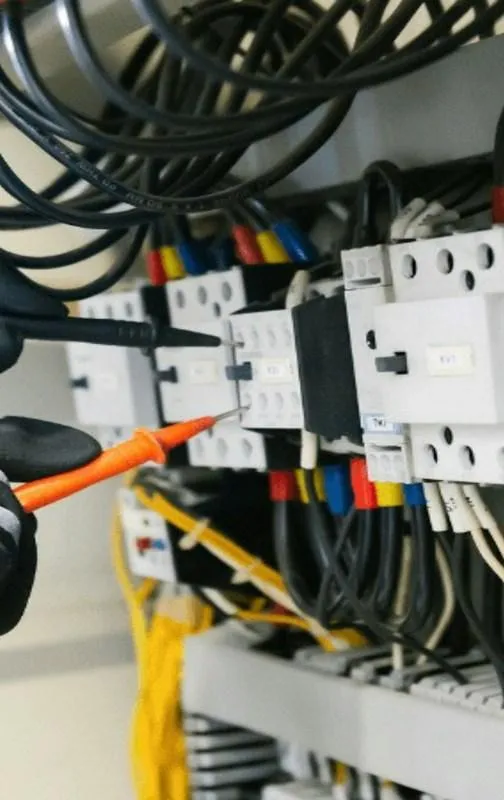

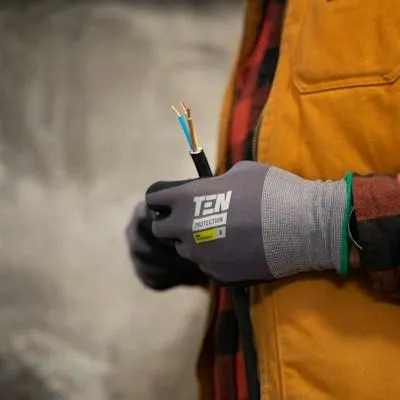
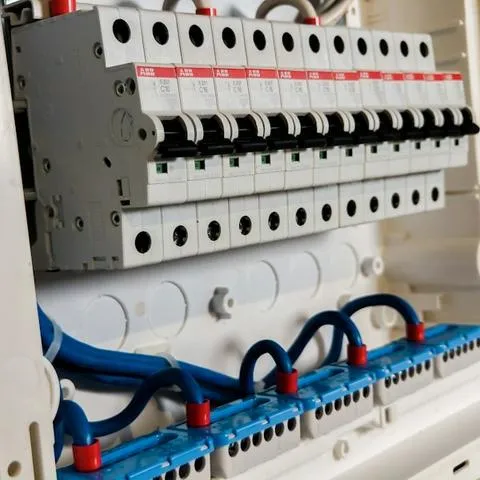

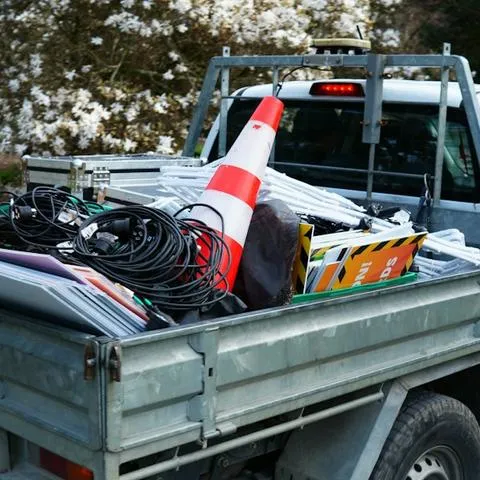
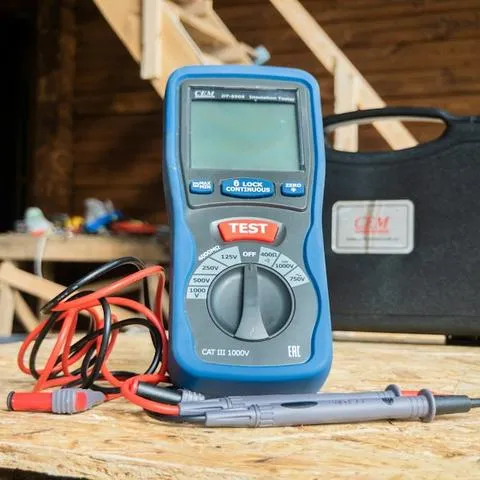





A structure prepared for your practice, to adapt at your own pace.
Let customers request site visits online
Customers need a straightforward way to explain what they need, check your coverage area and arrange a suitable visit if you offer one.
Without a clear process, customers may end up making repeated calls or exchanging several messages.
Webfolio includes appointment scheduling for visits with defined durations and availability. It can help organise surveys and consultations, but quoting complex jobs or arranging emergency call-outs may still require direct contact.
- 01. Online site visit booking
A clear enquiry or booking button
A prominent “Request a Quote” or “Book a Visit” button helps people understand what to do next.
You can show your working hours and, when you use Webfolio scheduling, the next available visit slot.
That way, customers can get started without searching through your contact details.
- 02. Online site visit booking
Choose the purpose and location of a visit
Visitors can choose an appointment such as “electrical fault assessment” or “site visit for a quote” where you offer those options. Other projects may need discussion first.
For a site visit, you can show a duration and any known fee. Work priced by quotation is then assessed separately.
You decide which visits can be booked online and keep control of your availability and quotations.
- 03. Online site visit booking
Availability that works around your schedule
The calendar shows time slots according to the hours and rules you have configured.
Set minimum notice periods and allow travel time between jobs.
That flexibility is useful when you work across multiple customer locations.
- 04. Online site visit booking
Automatic confirmations and reminders
Once a visit is booked, customers receive an email with the important details.
Reminders can also be sent ahead of the chosen time, including 24 hours and 3 hours beforehand.
Customers can review their booking and cancel online when your cancellation settings allow it.
- 05. Online site visit booking
One calendar to manage your day
Bookings made through Webfolio appear in your dashboard calendar.
You can review what is coming up, block out periods and change the slots available.
You can keep track of your appointments without juggling several calendars.
Online appointment booking is included with every Webfolio plan, including the free trial.
How to build trust through your electrician website
Trust matters when you are asking someone to work on your electrical installation.
Qualifications, response times and areas of expertise differ between electrical businesses.
Your website should make what sets you apart easy to understand without resorting to unsupported claims.
A few key elements can help establish that trust.
Show your qualifications and relevant insurance
Qualifications and relevant professional insurance give customers useful information before they hire you.
Describe the qualifications and authorisations you genuinely hold, the work you do and insurance relevant to your services.
If you hold professional certifications, say who issued them and what they cover.
Never confuse a short course with a professional authorisation, qualification or regulatory approval.
With Webfolio
You can highlight your team, relevant qualifications and professional background on your About page.
Display genuine testimonials
Testimonials can give new visitors a sense of what it’s like to work with you.
Genuine reviews may talk about the welcome, service, atmosphere, punctuality or the outcome of a visit.
Publish real reviews with appropriate permission. Do not invent endorsements, manipulate ratings or present edited comments as genuine.
With Webfolio
You can add testimonials to your site to help visitors get to know your business.
Explain how an electrical job works
Someone arranging an electrician’s visit often wants to know how an assessment, quotation and job will proceed.
Explain the main steps, from the first discussion to a survey, quotation, work and any relevant paperwork.
You could explain how you gather information about a fault, when a site visit is needed and how you prepare a quotation.
The clearer you make the process, the less visitors have to guess before taking the next step.
With Webfolio
Webfolio lets you describe bookable services with their duration and price, where applicable.
Show completed work and your professional equipment
Photos of completed jobs let people see the types of electrical work you undertake.
Use your photo gallery to show completed installations, work equipment and your branded vehicle.
Authentic photographs make your business more tangible for first-time visitors.
With Webfolio
Your website includes a gallery where visitors can open your photos in full size.
Highlight workshops and events
If you host workshops, talks or meetups related to your work, you can feature them on your site. If you don’t run events, simply leave this section disabled.
For each event, include the topic, date, location, duration and price.
Only highlight events and demonstrations that genuinely relate to the work you do.
With Webfolio
You can feature events in dedicated sections with all the practical details.
Answer questions from prospective clients
Before booking a visit, customers often ask which areas you cover, whether quotations cost anything and how soon you could attend.
A well-written FAQ answers common questions, helps people decide and saves repeated phone calls or messages.
Keep answers concise and factual. Make the important booking, accessibility, dietary, call-out or cancellation conditions clear where relevant.
With Webfolio
Webfolio drafts an initial FAQ from your questionnaire answers and displays it on your site. You can then add, edit and reorder questions in your dashboard, or generate more with AI.
Your legal notices also have their own dedicated pages, which you can edit whenever you need to.
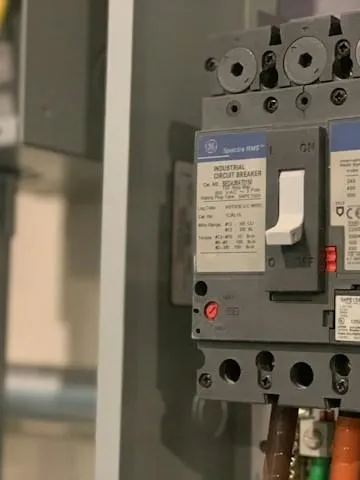
Webfolio provides space for the details that help people trust your business; you can fill it with accurate information about what you offer.
A fast, secure, SEO-ready electrician website
A website’s quality isn’t just about how it looks.
Loading speed, mobile usability, security and the way pages are presented to search engines all matter.
With a general-purpose website builder or a self-hosted WordPress site, some of this may require technical configuration, plugins or help from a developer.
Webfolio handles much of this technical groundwork so you can focus on your business.
Hosting included, with no server setup
Hosting is what keeps your website accessible online.
Your site is delivered through Vercel’s network, which caches pages and images to help them load quickly.
You get a hosted solution without having to manage your website’s underlying infrastructure yourself.
With Webfolio
There’s no need to find a hosting provider, configure a server or handle infrastructure updates yourself.
A domain name for your electrical business
Your domain is your web address, for example www.martin-electrician-bordeaux.fr.
Choose a short domain that reflects your trading name or business identity and is easy to remember.
A short, memorable domain that fits your professional identity is usually better than a long string of keywords.
Extensions such as .fr, .be or .com may be worth considering depending on your country and audience.
With Webfolio
You can start with a webfolio.com address and connect your own domain later.
A secure HTTPS connection
HTTPS encrypts the data exchanged between a visitor’s browser and your website.
With Webfolio
Your HTTPS certificate is provided and renewed automatically, including when you use a custom domain. There’s nothing to install or renew manually.
Images optimised for every screen
Large image files can slow down your pages, especially on mobile phones.
With Webfolio
Images are optimised and delivered in formats suited to different browsers and screen sizes. You can display your professional photos and gallery without needing to understand image compression.
Search-friendly page titles and descriptions
Each page on your electrician website has SEO-related elements, including a page title and meta description.
These help search engines understand what each page is about and may influence how it appears in search results.
“Martin Electrical — Electrician in Bordeaux” tells visitors more than a generic “Home” title.
The aim is to give each page a clear identity that reflects its content.
With Webfolio
SEO titles and meta descriptions are generated from your website’s information, and you can customise them afterwards.
Structured data that describes your business
Structured data gives search engines business information in a format they can interpret.
It makes your website easier for search engines to interpret, although it doesn’t guarantee any particular display in Google results.
With Webfolio
Webfolio automatically describes your business, address, opening hours and certain services using Schema.org. This makes business information easier for search engines to interpret; it does not guarantee special search features.
An automatically generated sitemap
A sitemap is a file listing your website’s main URLs to help search engines discover them.
With Webfolio
Your sitemap updates automatically when your pages change, and compatible search engines, including Bing, are notified of certain updates through IndexNow. During your free trial, your site is hidden from search engines; it becomes eligible for indexing once your subscription is active.
Hosting, HTTPS, optimised images, SEO titles and structured data are all included, with nothing to configure.
How to improve local SEO for your electrician website
Technical optimisation lays the foundation, but it can’t guarantee strong search visibility on its own.
For local visibility, describe what you offer, where you are based and the areas you serve.
People might search for “electrician in Lille”, “electrical repairs in Lyon” or “electrician in Brussels”.
To meet those needs, your website should provide useful, sufficiently detailed information.
You can also:
- create or update your Google Business Profile, if you’re eligible;
- keep your contact details and opening hours consistent everywhere you appear online;
- write original descriptions for each of your services;
- publish genuinely helpful educational articles;
- earn links from partners or organisations that are genuinely connected to your work;
- use Google Search Console to monitor how your website performs in search results.
Organic search visibility develops over time. A solid technical setup helps, but content relevance, local competition and the quality of your online presence are just as important.
Ready to create your electrician website?
Enter your business name and the area you cover: Webfolio prepares your pages, your services and your site visits in a few minutes.
Keep your electrician website up to date without technical skills
A professional website shouldn’t be static or left to go out of date.
Your services, prices, hours and practical information may change as your business develops.
You should be able to reflect these changes on your website easily, without hiring someone or paying extra for routine updates.
- Reason 1
Give visitors information they can rely on
Outdated prices, incorrect hours or an old address can cause confusion.
Keeping your details current helps visitors plan their appointments with accurate information.
- Reason 2
Maintain a consistent online presence
When something important changes, update it on your website, Google Business Profile and any other channels you use.
Consistency helps visitors understand your business and prevents conflicting information across different platforms.
- Reason 3
Show how your business is evolving
New services, completed projects or specialist qualifications are worth keeping up to date.
Regular updates show that your business is active and evolving, without requiring you to rebuild your site every time something changes.
Easily update your website yourself with Webfolio
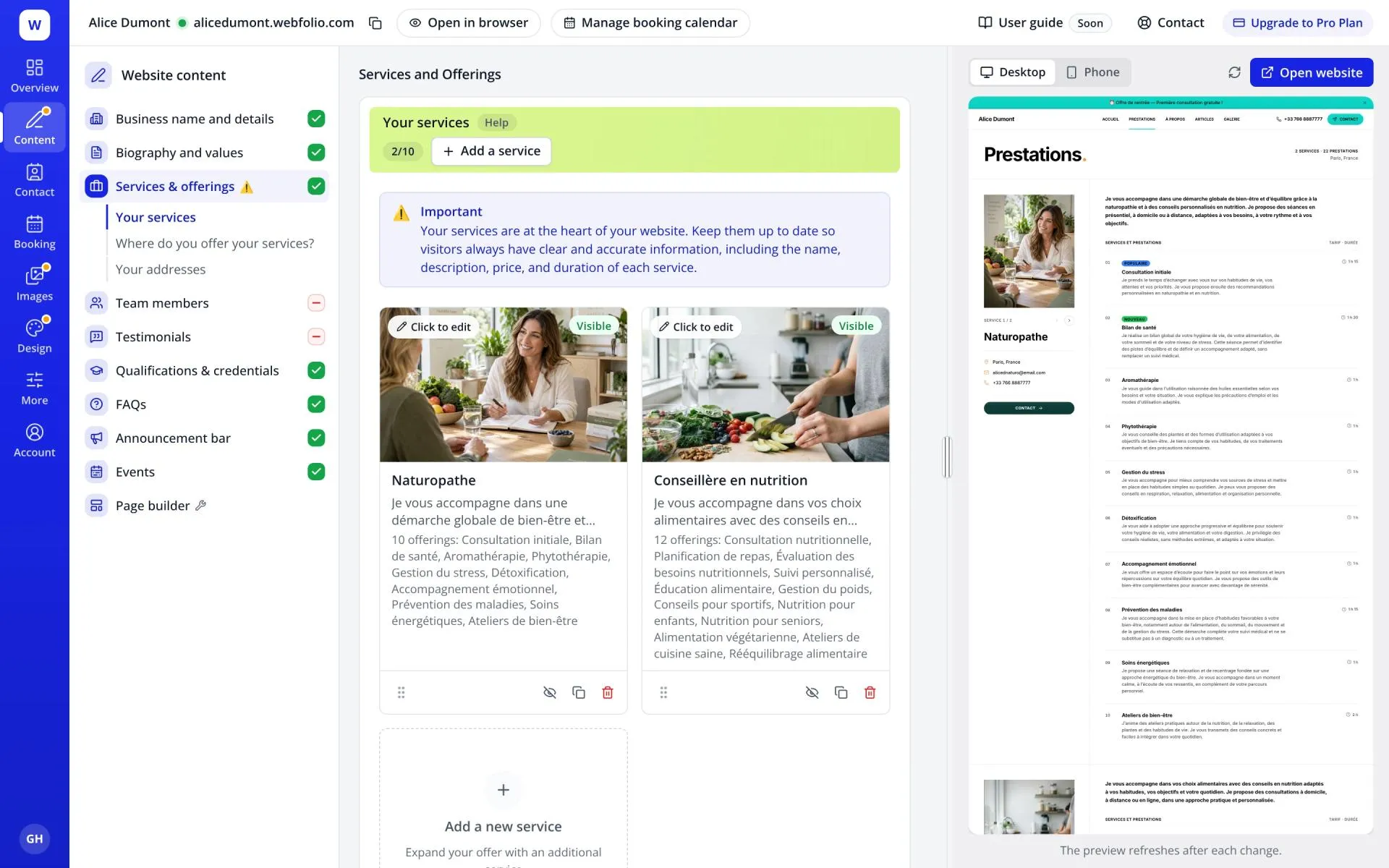
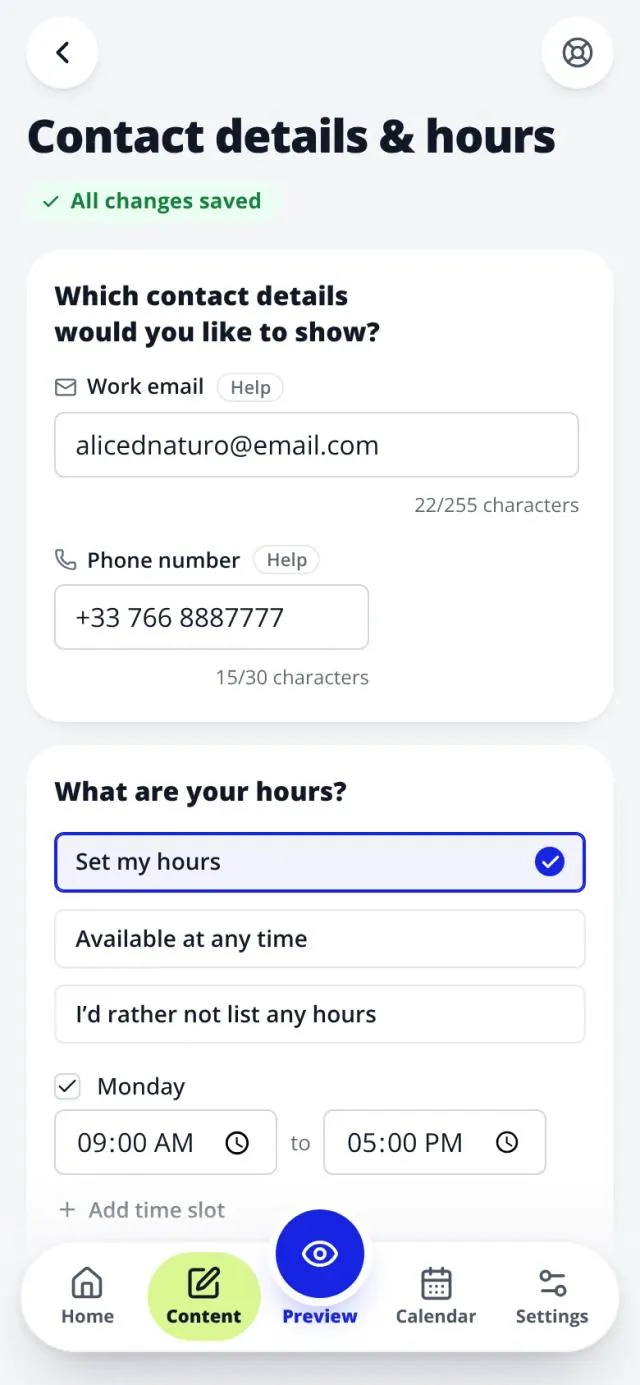
Manage your content from one dashboard
Webfolio gives you access to your website’s key information through a single management interface.
You can edit your copy, contact details, services, prices, opening hours, photos and selected design elements.
You don’t need to touch your website’s code to make these everyday changes.
Preview changes as you go
Your dashboard lets you preview your website on desktop and mobile.
You can see how your edits look and fine-tune the presentation as you go.
Manage your website from your phone
Need to update your availability or a service between jobs without opening your laptop?
Webfolio’s interface also works on smartphones, making everyday changes easier when you’re on the move.
Update your website whenever you need to, from your computer or phone.
How to create your electrician website with Webfolio
A traditional website builder usually means choosing a template, deciding how many pages you need and what goes on each one, configuring navigation menus, then writing and formatting all your content.
That approach gives you plenty of freedom, but it also takes time and involves many decisions that have little to do with your actual profession.
Webfolio takes a different approach.
Answer a few questions about your electrical business, and Webfolio uses your information to prepare the first version of your site.
Here’s how it works.
- 01. Build your website with Webfolio
Tell us about your business
Start with your trading name or professional name and choose the activity that best matches your business.
Webfolio uses this information to tailor the website setup to your line of work.
You don’t need to write a project brief or know anything about web development.
- 02. Build your website with Webfolio
Choose your services
Choose the services you actually provide rather than automatically publishing every suggestion.
You could include “electrical fault assessment”, “site visit for a quote” and other relevant options. Appointment slots are best suited to services whose duration you can define.
You can then add descriptions, durations and prices for each service.
Webfolio organises this information into consistent listings, without requiring you to design each one.
- 03. Build your website with Webfolio
Tell visitors where you work
Specify the areas you cover, where visits take place and whether customers can come to your premises.
Add more than one arrangement if that accurately reflects how your business operates.
Only describe your business address as a public location if you actually receive customers there.
- 04. Build your website with Webfolio
Set your working hours
Set the days and times when your business is open or available for appointments.
This allows visitors to see your hours and can also provide the starting point for your online booking schedule.
You can update these later as service hours, holidays or working patterns change.
- 05. Build your website with Webfolio
Choose your website’s look and feel
Webfolio offers a selection of visual styles to suit your professional identity.
Choose a clear style that reflects your business and select colours that work well with your brand and photographs.
You can personalise the site further by adding photos and adjusting other design details.
- 06. Build your website with Webfolio
Get your first draft and make it yours
Once you’ve completed the questionnaire, Webfolio builds your website using the information you’ve provided.
You’ll have an initial site structure with the key pages, your services and your professional details already in place.
Review the wording, check the information and add anything else you think is needed.
After that, you can keep updating your website through the dashboard without starting over.
A 14-day free trial, with no credit card and no technical skills needed.
Mistakes to avoid when creating an electrician website
A professional website should be clear, accurate and consistent with the rules that apply to your business.
Here are five mistakes worth avoiding.
Promising results or response times you cannot guarantee
Do not claim that every electrical fault can be fixed on the spot before it has been assessed.
Distinguish troubleshooting, safety work, repairs and full renovations. Prices and timings depend on the job.
Clear service terms are more credible than absolute promises.
Misrepresenting your qualifications
Qualifications, insurance and authorisations can differ by country and by type of work.
Describe the training, certifications and relevant insurance you actually hold.
Do not imply you have an approval or regulatory status you cannot substantiate.
Posting misleading testimonials or photographs
Reviews and photos can show what people appreciate about your work and service.
Never invent them, alter them in a misleading way or imply they guarantee a particular result.
Get appropriate permission before publishing identifiable client, employee or private-property photographs.
Overlooking personal data
A contact or booking form should collect only the information needed to handle that request.
In Europe, the GDPR sets requirements for processing and protecting personal data.
Avoid asking for sensitive or unnecessary personal details unrelated to a booking, service or quotation.
Forgetting mobile visitors and practical information
Even an attractive website is difficult to use if menus, services or contact details are hard to read on a phone.
Make sure prices, hours, booking conditions, directions and ways to contact you are easy to find.
Simple, intuitive navigation should remain a priority.
Clear pages and reliable information, ready to update whenever your business changes.
Frequently asked questions about electrician websites
Can I build an electrician website without coding?
Yes. Platforms such as Webfolio let you create a professional website without programming skills.
Enter your business details and use the dashboard to edit the pages that Webfolio prepares.
How much does an electrician website cost?
The cost depends on the platform, design and features you actually need.
A bespoke website built by a professional typically comes with an upfront design fee, and there may be ongoing hosting and maintenance costs.
A content management system such as WordPress can suit a highly customised project, but you’ll need to arrange hosting and manage the technical side.
Webfolio is subscription-based and offers a 14-day free trial without a credit card. Check the current plans and prices before subscribing.
What is the best website builder for an electrician?
There’s no single best solution for every project.
WordPress offers considerable flexibility, especially for websites that need specific features or extensive customization.
Wix lets you build pages visually and is a good fit if you want hands-on control over the layout.
Squarespace and Shopify are often considered for online selling, such as running an online store.
Webfolio is aimed at independent professionals and small businesses that want a prepared website structure they can manage themselves.
The right option depends on what you need, what you can spend and how much time you want to devote to managing the site.
Do I need a custom domain name?
Not to get started, although a domain that matches your professional identity can make your website easier to remember.
Webfolio lets you begin with a webfolio.com address and connect a custom domain later.
Can customers request a quotation and a site visit?
Yes. Your site can explain how to request a quote or visit, and you can make defined appointments bookable if that suits your business.
You can specify a duration, an applicable appointment fee and location for bookable visits; complex project quotations still need separate assessment.
How can my electrical business appear on Google?
Start with useful pages describing your business, services and location in terms customers actually search for.
Add or update your Google Business Profile if you’re eligible, and make sure your contact information stays consistent.
Good local SEO usually takes time. No website builder can guarantee a particular position in search results.
Do I need a blog for my electrical business?
No. Blog posts can support your organic visibility, but they are not essential when launching your site.
Focus first on a clear homepage, an About page, accurate descriptions and easy-to-find contact information.
How long does it take to create a website with Webfolio?
The initial questionnaire takes around five minutes and gives Webfolio what it needs to prepare a first version of your site. That first version is generally polished enough to use straight away.
The remaining time depends on the photos, wording, prices, opening hours and other details you choose to review or add.
The goal is to save you the technical work of building a website so you can concentrate on presenting your business.

Create your electrician website with Webfolio
Your website should help visitors understand your approach, discover your services and request a quote without difficulty.
Creating it should not, however, require you to become an expert in web development, design or search ranking.
With Webfolio, you enter the information about your electrical business, and it prepares the pages, organises your services and helps you write your content.
You can then personalise your presentation, add your photos, manage your bookings and keep your site up to date from a single dashboard.
Focus on your electrical business. Webfolio helps you create and manage your online presence.
14 days free · No credit card · Customisable site · Online booking built in